
Seasickness on a kayak tour: what to expect
Plenty of people rule out anything on the water because a ferry once ruined a day for them. That is often the wrong conclusion, because a kayak and a boat produce very different kinds of motion, and the difference works in your favour. Here is why, where the exception is, and what to do about it.
Why kayaks are easier than boats
Motion sickness comes from a disagreement between your inner ear and your eyes. Your ear reports movement, your eyes report a stationary cabin wall, and your brain resolves the argument badly.
A kayak removes most of the ingredients. You are outside in fresh air. You sit low, so the movement is small and immediate rather than a long slow roll. You face forward with the horizon and the shoreline permanently in view, which is exactly the visual reference your brain is asking for. And you are working, which keeps your attention outward instead of inward.
People who reliably struggle on ferries and catamarans very often have no trouble at all in a kayak. It is one of the more pleasant surprises in this job.
The one moment it can still happen
The snorkel stop. Floating face down, breathing through a tube, with the surface moving under you and nothing fixed to look at, is the single most motion-provoking thing on the tour. It catches people who were perfectly fine while paddling.
The fix is simple and immediate: lift your head, look at the shoreline, and hold onto the kayak. Ninety seconds of that usually settles it. If it does not, get back on the kayak and watch from the surface. Nobody minds and it is more common than you would think.
Before you go
Sleep, and eat something plain beforehand. An empty stomach is worse than a light one, and a heavy night out is the most reliable predictor of a bad morning on the water that we know of.
Drink water before you arrive. Dehydration in this climate produces headache, nausea and general misery that gets blamed on the sea every time.
If you use motion sickness tablets, take them well before departure rather than when you start feeling unwell, because most need time to work. Read the drowsiness warning, and ask a pharmacist or your doctor about what suits you. We are guides, not clinicians, and we will not recommend a medication to you.
Skip alcohol the night before if you are prone. It is a small sacrifice for a good morning.
During the tour
Keep your eyes on the horizon or the shoreline rather than on the water immediately beside you, and definitely not on a phone screen.
Keep paddling. Movement helps, and stopping to concentrate on how you feel makes it worse.
Tell the guide early. Early is a small adjustment, a longer stop or a slower pace. Late is a problem. Guides deal with this regularly and it is neither embarrassing nor unusual.
Stay hydrated and stay in the shade at stops where there is any.
Which departure and route is gentlest
Take the 8:30 AM departure. Morning is the calmest water of the day, before the trade wind builds through the afternoon, and the air is cooler.
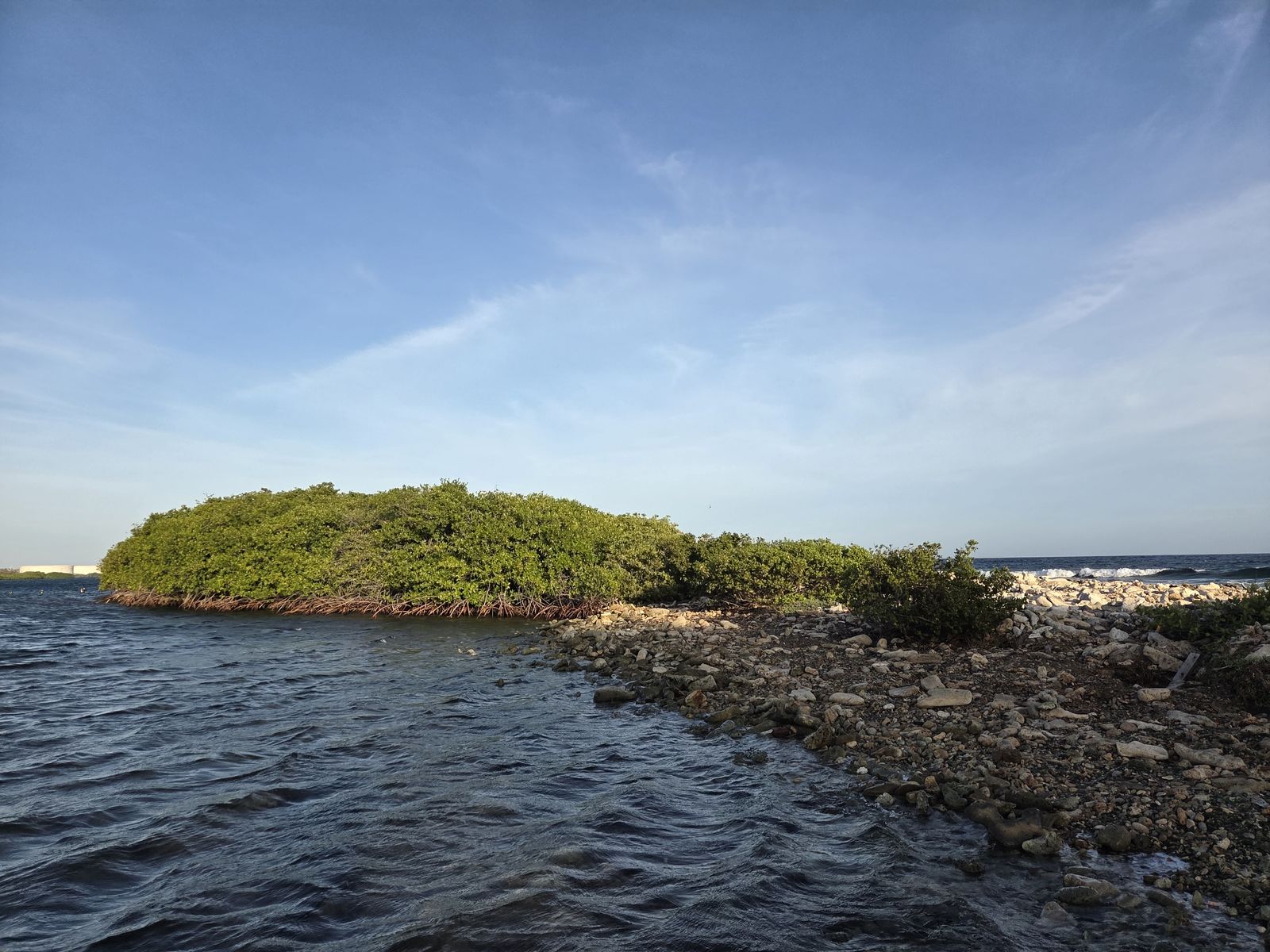
Take the lagoon and reef route at Mangel Halto over the open crossing to Sea Glass Island. The mangrove channels are genuinely still, the sheltered lagoon is close to flat, and the snorkel stops are in protected water rather than on an exposed line.
That combination is about as gentle as anything on the water gets on this island.
Sun and dehydration get blamed on the sea
A significant share of the queasiness people describe on tours here is not motion at all. It is heat, sun and not enough water, with the trade wind hiding all three by keeping you feeling comfortable while you cook.
A hat, a long-sleeved light shirt, mineral sunscreen and drinking more water than you think you need will prevent more nausea on this coast than any tablet. The rest of the list is on our what to bring page.
Where to next
Compare vessels in kayak tour or catamaran cruise, read the swimming requirement, check what to bring, or see pregnancy, mobility and accessibility.
Questions guests ask
Can you get seasick in a kayak?
It is possible but much less likely than on a boat. You sit low and outside, facing forward with the horizon in view, and you are active. Most people who struggle on ferries are fine in a kayak.
What is the worst moment for motion sickness on the tour?
The snorkel stop, not the paddling. Floating face down with nothing fixed to look at is the provoking part. Lift your head, look at the shore and hold the kayak, and it usually settles in under two minutes.
Should I take a motion sickness tablet?
That is a question for a pharmacist or your doctor, not for us. If you do use them, take them well before departure rather than once you feel unwell, and check the drowsiness warning first.
Which tour is gentlest if I am prone to motion sickness?
The 8:30 AM departure on the Mangel Halto lagoon and reef route. Morning water is calmest and the mangrove channels and sheltered lagoon are the flattest water we paddle.
Choose your adventure
Live availability and instant booking. Pick a date, grab your paddle, and we'll see you on the water.